Archives
- 2026-04
- 2026-03
- 2026-02
- 2026-01
- 2025-12
- 2025-11
- 2025-10
- 2025-09
- 2025-03
- 2025-02
- 2025-01
- 2024-12
- 2024-11
- 2024-10
- 2024-09
- 2024-08
- 2024-07
- 2024-06
- 2024-05
- 2024-04
- 2024-03
- 2024-02
- 2024-01
- 2023-12
- 2023-11
- 2023-10
- 2023-09
- 2023-08
- 2023-07
- 2023-06
- 2023-05
- 2023-04
- 2023-03
- 2023-02
- 2023-01
- 2022-12
- 2022-11
- 2022-10
- 2022-09
- 2022-08
- 2022-07
- 2022-06
- 2022-05
- 2022-04
- 2022-03
- 2022-02
- 2022-01
- 2021-12
- 2021-11
- 2021-10
- 2021-09
- 2021-08
- 2021-07
- 2021-06
- 2021-05
- 2021-04
- 2021-03
- 2021-02
- 2021-01
- 2020-12
- 2020-11
- 2020-10
- 2020-09
- 2020-08
- 2020-07
- 2020-06
- 2020-05
- 2020-04
- 2020-03
- 2020-02
- 2020-01
- 2019-12
- 2019-11
- 2019-10
- 2019-09
- 2019-08
- 2019-07
- 2019-06
- 2019-05
- 2019-04
- 2018-11
- 2018-10
- 2018-07
-
In accordance with its original discovery EBI
2021-06-21
In accordance with its original discovery, EBI2 may play its major role in response to viral infections or in a pathological context such as in autoimmunity. Although we found a significant delay of onset in the Th17 transfer EAE model, active EAE was unchanged in absence of EBI2. At the moment, we
-
An increasing body of evidence demonstrates that
2021-06-21
An increasing body of evidence demonstrates that MXC can cause neurobehavioral and neuropathological alterations [7]. In the brain, there are several steroidogenic enzymes, which are responsible for neurosteroid production. Neurosteroids are subsets of steroids that rapidly change neuronal excitabil
-
The death associated protein kinase DAPK is an actin
2021-06-21
The death-associated protein kinase (DAPK) is an actin-associated, calcium/calmodulin-dependent enzyme with serine/threonine kinase activity [11], [12]. DAPK is a pro-apoptotic gene and participates in various apoptotic systems, such as TNF-α- and Fas-triggered apoptosis [10], IFN-γ-induced cell dea
-
MRT67307 HCl Although the crystal structures of Atg C and At
2021-06-21
Although the crystal structures of Atg4C and Atg4D are not available, their three dimensional structures can be acquired by homology modeling, using the structure of Atg4B as a template (Zhang, Li, Ouyang, Liu, & Cheng, 2016). In that model, the catalytic triad is conserved (Cys110/Asp345/His347 for
-
Published results have revealed relationships between serine
2021-06-21
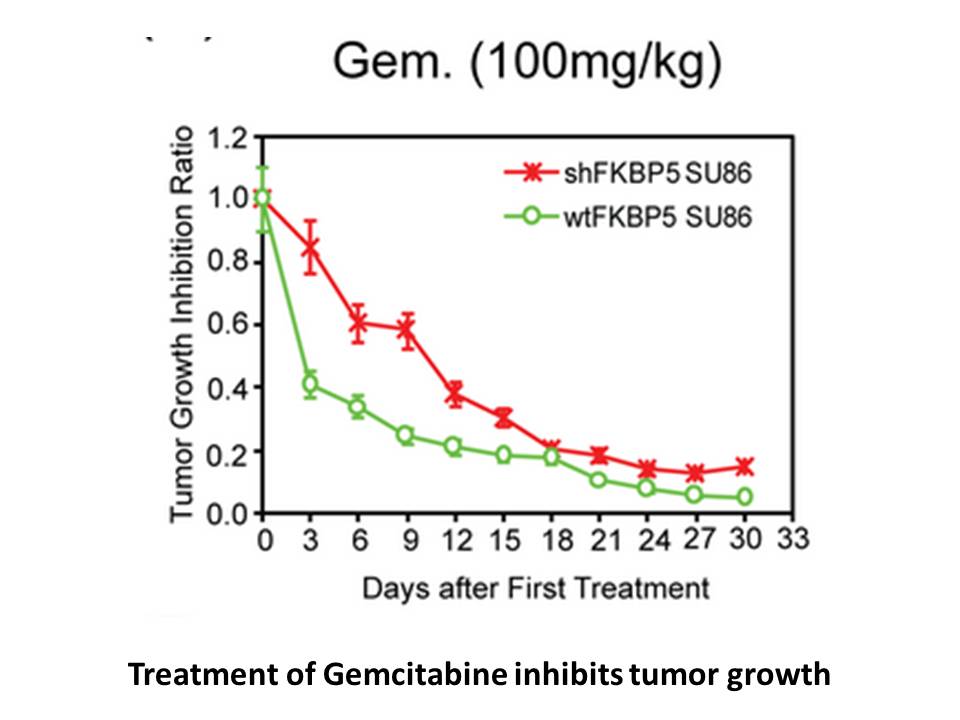
Published results have revealed relationships between serine 81 in AR and some CDKs, especially CDKs 1, 5 and 9 [12], [13], [14], [15], [16]. These results are often supported by pharmacological inhibition of a certain CDK. An effect of CDK1 inhibition on suppression of S81-phosphorylation was previ
-
To ascertain that the slower
2021-06-21
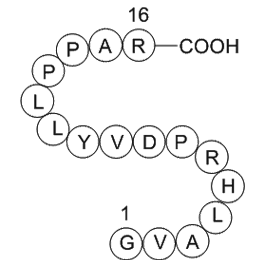
To ascertain that the slower migrating bands represented phosphorylated CDK5, we performed a phosphatase assay. Lysates of Quetiapine co-expressing p35 and either WT or D144N CDK5 were immunoprecipitated using an anti-p35 antibody. The immunoprecipitates were then dephosphorylated using SAP along w
-
The full length human CPG protein is expressed in CNS
2021-06-21

The full-length human CPG2 protein is expressed in CNS tissue with the highest expression in the neocortex, hippocampus and striatum, consistent with mRNA localization patterns of the rat Cpg2 homolog (Cottrell et al., 2004). In the rat, the CPG2 protein localizes primarily to the postsynaptic endoc
-
Introduction Robust evidence suggests that genetic
2021-06-21
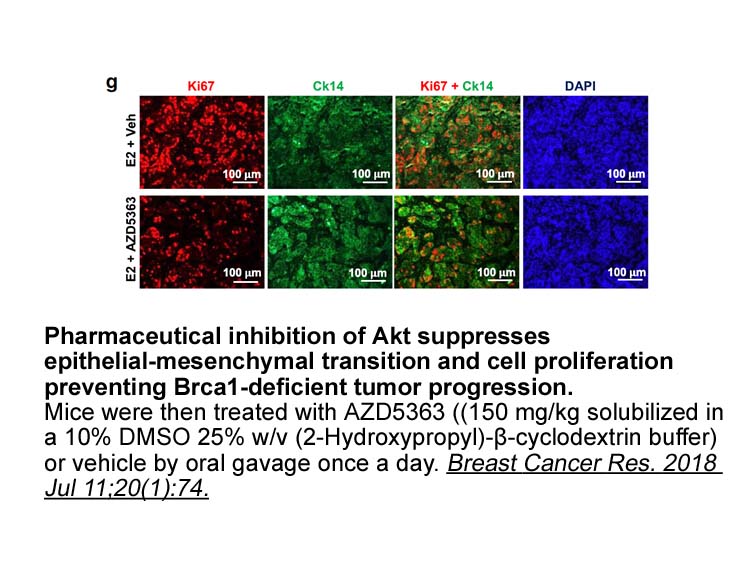
Introduction Robust evidence suggests that genetic factors influence an individual's susceptibility to BD (Craddock and Sklar, 2013). Yet, no single, high penetrance gene has been identified with direct causality (Craddock and Sklar, 2009). The largest GWAS to date for identifying genes conferring
-
CK enzymes belong to a conserved
2021-06-21
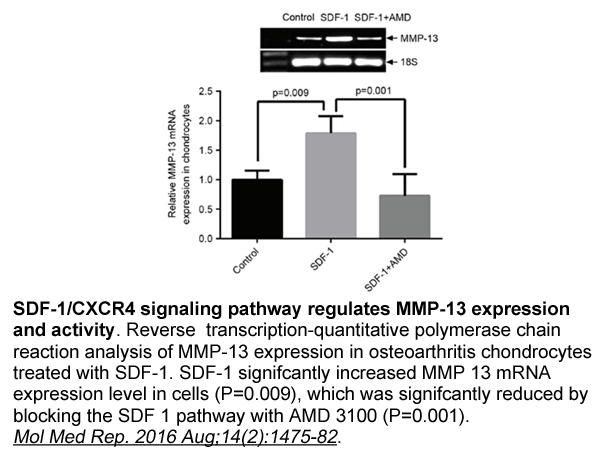
CK1 enzymes belong to a conserved family of serine/threonine protein kinases that plays an important and diverse role in vesicular trafficking, DNA repair, Wnt-C59 progression and cytokinesis in organisms from yeast to humans [15]. In multicellular organisms CK1 enzymes also regulate developmental
-
Estrogen receptors ERs belong to the third class of
2021-06-21
Estrogen receptors (ERs) belong to the third class of nuclear receptors (NR3) [23]. Two different forms of ER have been described, ERα and ERβ. They are coded by two distinct genes (ESR1 and ESR2, respectively) containing 8 transcribed exons that give rise to six conserved protein domains: domains A
-
br Introduction Prostaglandin E PGE signals through separate
2021-06-19

Introduction Prostaglandin E2 (PGE2) signals through 4 separate G-protein coupled receptor sub-types (EP1, EP2, EP3 and EP4) to elicit a variety of physiological and pathophysiologic effects. EP2 and EP4 increase cAMP levels in the cell via adenylate cyclase activation, whereas EP3 inhibits cAMP
-
In human neuroblastoma SH SY Y cells
2021-06-19
In human neuroblastoma SH-SY5Y harmine and in lymphoma Jurkat cells, Yamanaka et al. [56] showed that exogenously added 24(S)-hydroxycholesterol could be efficiently esterified by ACAT1. These results suggest that both ACAT1 and ACAT2 can control the oxysterol levels by directly esterifying them, i
-
br Introduction Cerebral stroke causes
2021-06-19
Introduction Cerebral stroke causes an efflux of various groups of progenitor and stem cells from bone marrow to bloodstream and the levels of these cells correlate with neurological status of stroke patients (Gójska-Grymajło et al., 2012, 2018). It is thought that paracrine factors produced by t
-
Similar to EGFR another receptor tyrosine kinase RTK
2021-06-19
Similar to EGFR, another receptor tyrosine kinase (RTK), fibroblast growth factor receptor 4 (FGFR4), is gaining attention in the lung cancer setting. The protein expression of this receptor has been recently associated with a negative impact on lung cancer prognosis, supporting the idea that FGFR4
-
In addition to grouping cases of B ALL by
2021-06-19
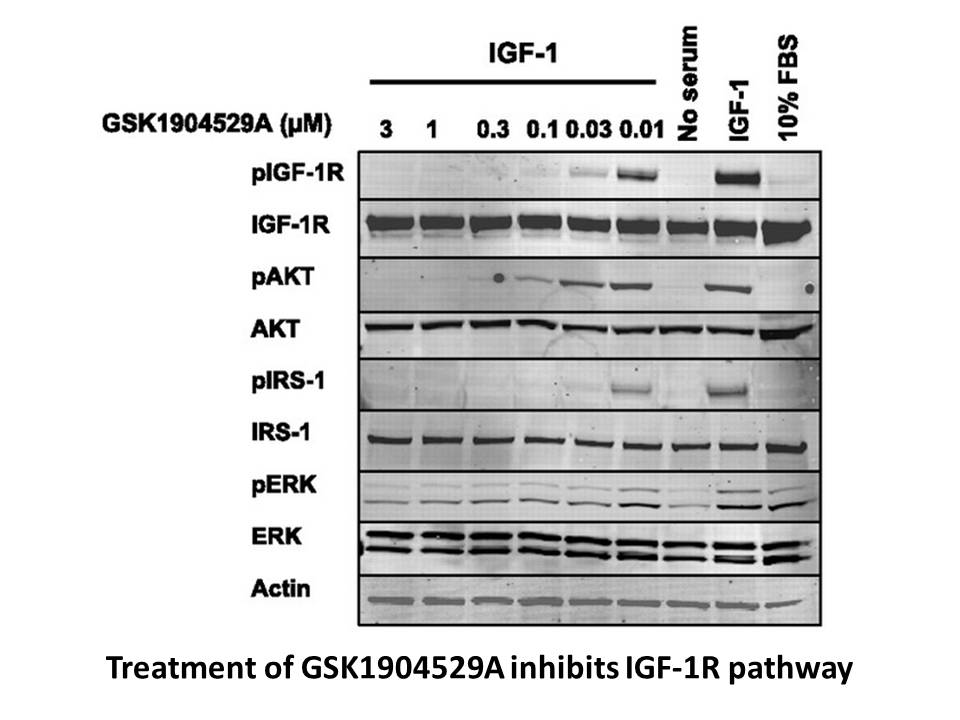
In addition to grouping cases of B-ALL by cell of origin, these lymphomas can also be subcharacterized by genetic rearrangements. Fusion of the purinergic receptor P2RY8 promoter to the CRLF2 (cytokine receptor like factor 2) gene frequently occurs in B-ALL but reports of the functional consequences
16268 records 644/1085 page Previous Next First page 上5页 641642643644645 下5页 Last page